
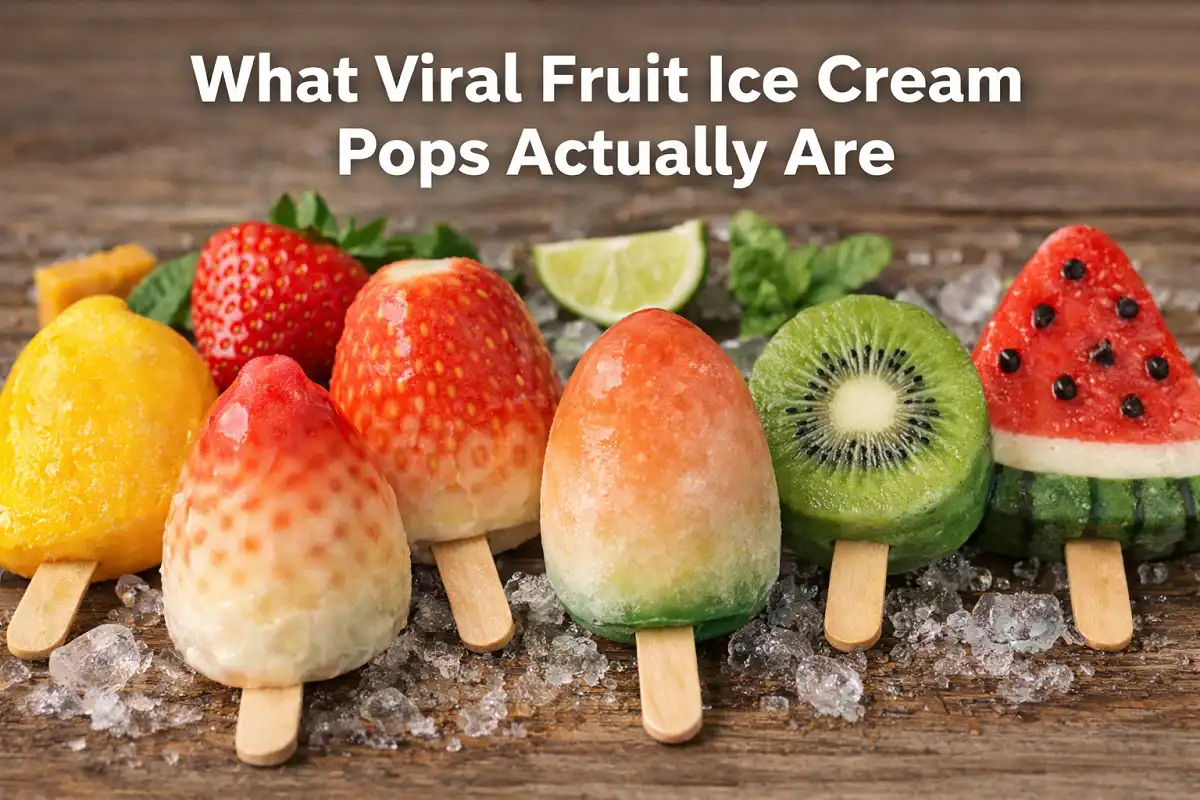
The first time a kiwi pop showed up on my feed, I genuinely stopped and zoomed in. It looked like someone had sliced a real kiwi, pressed a stick through it, and frozen it whole. The green was vivid, almost electric. The little black seeds were arranged in exactly the right place. I sat there thinking it had to be a prop. Then the creator bit into it on camera, and it cracked the way a real frozen bar does, and I was already pulling up a tab to find out where to buy them.
In the next few days, I had ordered molds, cleared out the frozen fruit section at Trader Joe’s, and completely ruined my first batch. This is everything learned between that day and now, including the part nobody talks about, which fruits quietly destroy a whole batch before it even hits the freezer. That’s why we are covering how to make the viral fruit ice cream pops at home without sugar, and the things that need to be taken care of to make it easily.
Table of Contents
What Viral Fruit Ice Cream Pops Actually Are
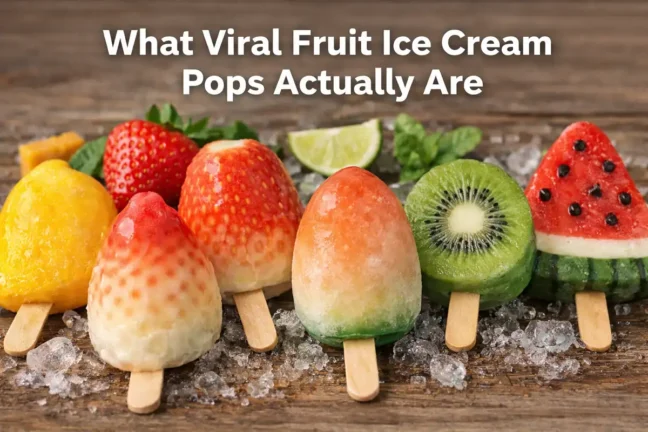
Viral fruit ice cream pops are not popsicles with fruit flavoring dropped in. The design is the whole point. A watermelon bar has a dark green outer shell, a thin white band running through the middle, and a deep red center with small chocolate chips pressed in to look like seeds.
A mango pop replicates the exact golden flush of a ripe Ataulfo mango. A strawberry version shows pale cream flesh just inside the skin with tiny seed details on the surface. Creators spent most of last year ranking every viral fruit-shaped ice cream available online, comparing visual accuracy to actual flavor, and the gap between the two in commercial versions became its own separate conversation.
The reason the homemade version is worth making is simple. Store-bought viral fruit ice cream relies on added sugar and artificial coloring to fake the flavor intensity. After trying three different brands, the mango one tasted like mango candy, and the strawberry tasted generically pink.
Homemade means the fruit does the actual work, which is both cheaper and genuinely better once the process is understood. For a broader look at which food trends are worth the effort versus which ones are purely visual, ViralFindsUSA covers what is actually gaining real traction in food culture right now.
The Fruit Selection Problem needs to know for Viral Fruit Ice Cream:
The problem is with the two batches of fruit ice cream, and it is something that is missing from almost every guide to making viral fruit ice cream that you can find online. The thing is that not all fruits freeze in the same way, and the ones that look really nice are often the ones that cause the most trouble.
My first batch of watermelon ice cream did not turn out well; it was like shaved ice that you scrape off a block. It was grainy and loose, nothing like the ice cream that I saw in the pictures. Honeydew and cucumber are even worse. Then I found out that if you blend the watermelon first, and then you strain it through a fine mesh sieve to get rid of the extra liquid, and then you mix the pulp with a coconut cream that has a lot of fat, it turns out really well. I did this with my batch, and it was completely different.
Some fruits are really great because they do not need anything. I am talking about mango, strawberry, peach and raspberry. These fruits have a lot of fiber and sugar in them.
When you put them in the freezer, mango, strawberry, peach, and raspberry stay smooth and dense. The best fruit to use for this is a banana. It has to be really ripe. When you freeze a ripe banana, it gets thick and creamy like the cream you find in dairy products.
If you blend one banana into any fruit ice cream, like mango or strawberry ice cream, it makes the fruit ice cream thicker and sweeter. The good thing about adding a banana to fruit ice cream is that it does not change the way the fruit ice cream tastes.
Full Ingredients List With Quantities and Estimated Costs
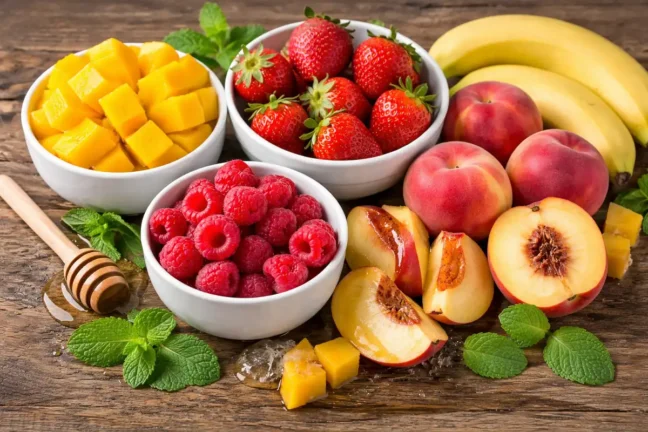
This is the complete shopping list for one batch of mango viral fruit ice cream pops, which makes six standard sized bars. All items below can be found at Walmart, Kroger, Trader Joe’s, or Target; prices are estimates based on current US supermarket averages.
- Frozen ripe mango chunks, 2 cups: A 16 oz bag of frozen mango is priced between $3.99 and $5.49, depending on the store. Trader Joe’s has consistently had the best price at around $4.29. One bag covers one full batch with a little left over
- Full fat coconut milk canned half a cup: A 13.5 oz can costs between $1.89 and $2.99. Thai Kitchen and Native Forest are the two most widely available brands. One can is more than enough for one batch; the remainder keeps in a sealed container in the refrigerator for three days.
- Plain whole milk Greek yogurt 2 tablespoons: A small 5.3 oz single serve container costs about $1.29 to $1.79. Chobani and Fage are found in every major grocery store. This amount is just for the cream middle layer, so you don’t need a larger tub unless you double the batch
- Medjool dates 1 large soft date: A small 6 oz package of Medjool dates is priced between $4.99 and $6.99. They can be found in the produce section at most stores, sometimes near the nuts and dried fruit aisles. One date per batch will suffice, meaning one package will last through many rounds of testing
- Fresh lime, half a lime: Individual limes cost between fifty cents to seventy-nine cents each. The juice brightens up that mango flavor without being detectable as a separate ingredient
- Fine sea salt, one small pinch: Already in most kitchens, Negligible cost
- Vanilla extract, a few drops for the cream layer: Small 1 oz bottles are priced between $3.99 and $5.49. McCormick is pretty much ubiquitous in every store.
- Silicone popsicle molds with sticks: This is a one-time purchase. Tovolo fruit-shaped silicone molds retail on Amazon and in Target’s kitchen section between $9.99 and $14.99. Plastic molds are cheaper at around $5.99 but will crack after several uses, ruining the layered design when you try to unmold them. The silicone mold pays for itself after the first batch in terms of results alone!
Total estimated cost per batch of six pops is anywhere from $12 to $16, depending on what happens to be already in the kitchen. That works out to about two bucks to two seventy per pop! That’s cheaper than most store-bought viral fruit ice cream pops, which go for between three fifty and six dollars per bar, depending on brand and retailer!
For a strawberry version, swap the frozen mango for a 16 oz bag of frozen strawberries at $3.29 to $4.49 and replace the coconut milk with Greek yogurt as the base instead. A matcha powder option for green layering costs between $7.99 and $11.99 for a small tin and is available in the tea aisle at most Whole Foods, Sprouts, and larger Kroger locations.
Step-by-Step: How to Make the Viral Fruit Ice Cream Pops (Mango Recipe)
Step 1: Build the Mango Base
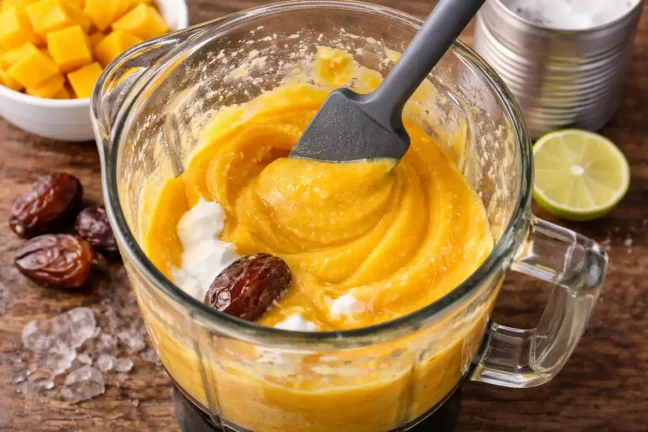
Add two cups of frozen ripe mango to a blender. Pour in half a cup of full-fat coconut milk from the can. Drop in one soft medjool date with the pit removed. Add the juice of half a lime and a small pinch of fine sea salt. The salt is not optional; it sharpens the mango flavor in the same way it works in savory cooking, and every batch without it tasted noticeably flatter.
Blend on high for about ninety seconds until the mixture is completely smooth and pourable. It should look glossy and thick, not watery. Taste it before pouring. It needs to taste slightly sweeter at room temperature than the ideal finished pop should be, because freezing pulls sweetness back significantly. If it tastes exactly right coming out of the blender, it will taste flat in four hours. Adjust with a small drizzle of honey if needed, blend for another ten seconds, and taste again.
Step 2: Pour the Base Layer Into the Molds
Pour the mango base into each silicone mold cavity until it fills roughly two thirds of the available space. Tap the mold firmly on the counter four or five times to push out any air sitting at the bottom. Do not add the sticks yet. Set the mold flat in the freezer and do not touch it for at least two full hours.
This is the hardest part of the whole process and the place where the first batch failed. At ninety minutes the top layer looks solid. The interior is not. Adding the cream layer at ninety minutes causes the two layers to bleed into each other overnight, and the clean layered design that defines viral fruit shaped ice cream disappears entirely. Two hours minimum. Three hours is the safer choice.
Step 3: Prepare the Cream Middle Layer
While the mango base freezes, stir together three tablespoons of coconut cream from the top of the can, two tablespoons of plain Greek yogurt, and three or four drops of vanilla extract. Stir it rather than blending it. Keep it thick. Do not sweeten this layer at all.
This band represents the pale flesh just under the skin of a mango and its only job is visual contrast. The mango base carries all the flavor. Adding sweetener to the cream layer pushes the balance off and the pop starts tasting muddled rather than layered. Thick, cold, and unsweetened is exactly what this layer needs to be.
Step 4: Add the Cream Layer Over the Frozen Base
After two full hours, remove the mold from the freezer. Press one finger gently on the surface of the mango base in any cavity. There should be zero give. If it feels slightly soft in the center, put the mold back in for another thirty minutes. Once confirmed fully solid, spoon the cream mixture slowly and carefully over the top of each frozen mango layer.
Pour slowly because the temperature difference between the frozen base and the room temperature cream can cause hairline cracks in the base if it hits too fast. Fill each cavity to just below the rim. Press the popsicle sticks straight down into the center of each pop until they stand without tilting. Return the mold to the freezer for a second full two-hour freeze before attempting to unmold.
Step 5: Unmold Without Losing the Design
Fill a large bowl with cool tap water. Not warm, not hot-cool. Submerge the bottom of the silicone mold in the water for about fifteen seconds. Pull it out, press gently upward on the base of each cavity, and the pop releases cleanly. Warm water causes the outer layer of the pop to melt too quickly, and the color and detail blur before it even hits the plate. Cool water is enough to release the silicone without sacrificing the surface of the pop.
The Fruit Problem: No Viral Fruit Ice Cream Pops Recipe Mentions to date!
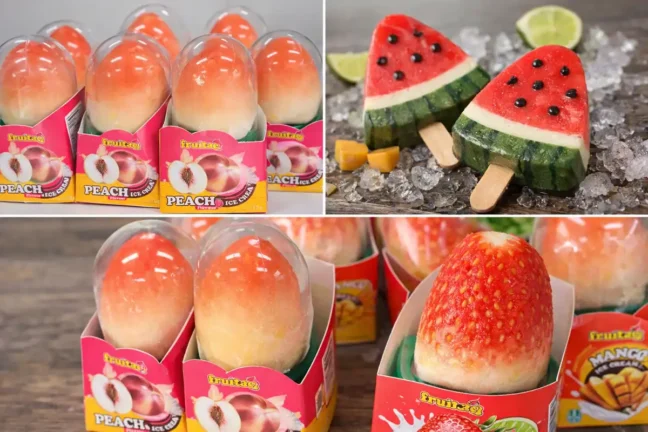
High water content fruits ruin a batch silently for your viral fruit ice cream. Watermelon, honeydew, and cucumber release so much liquid during freezing that the entire base turns grainy and coarse instead of smooth and dense. The first watermelon batch came out tasting exactly like a snow cone, visually perfect, texturally wrong.
The fix for watermelon is worth knowing because the visual result is the best of any fruit tested. Blend the watermelon first, then pass the liquid through a fine mesh sieve to strain out the excess water. What remains is concentrated watermelon pulp with far less water content. Combine that pulp with a half cup of full-fat coconut cream before pouring it into the mold, and the texture issue disappears. The third batch of watermelon pops came out smooth, clean, and genuinely refreshing.
Mango, strawberry, peach, and raspberry work without any intervention. Their fiber and natural sugar hold together during freezing without extra steps. One overripe banana blended into any of these bases adds body and thickness without registering as a separate flavor, which makes it useful when the base feels too thin after blending.
Ranking Every Viral Fruit Shaped Ice Cream Made at Home: As per my Experience
After seven fruit combinations across two summers of testing, mango sits at the top. The coconut milk base and the natural density of frozen mango produced the closest result to what the trend originally showed. Strawberry with Greek yogurt as the base came in second because the natural tartness gave it a layered quality that the mango version did not have. Peach followed closely, especially with very ripe late summer fruit that needed almost no added sweetener at all.
Kiwi produced the most visually precise result of the group, but divided opinion sharply. Every adult in the group reached for it. The two kids who tried the kiwi pop put it back down after one bite and went straight for mango. That exact preference split appears over and over again in comment sections across TikTok and Reddit threads about viral fruit ice cream pops, and it is worth keeping in mind before making a large batch for a mixed age group.
Watermelon, after the sieving step was figured out, produced the most visually striking pop of all seven. It took three attempts to get right and was the most satisfying to finally nail.
The peach and cream batch sitting in the freezer right now used the same molds, the same process, and the same patience required every time. Some early batches went straight into the trash. The plastic mold cracked on the second use. The first watermelon attempt was a lesson in fruit science.
None of that is the discouraging part. The process to make viral fruit ice cream becomes straightforward once the base formula is understood: ripe fruit, the right fat source, two full hours between each layer, and a silicone mold that actually releases cleanly. Making viral fruit ice cream pops at home stopped feeling like following a trend a long time ago. The trend moved on. The pops stayed.
Read more: